Open school data for greater trust and transparency across Europe

Across Europe, collecting and sharing school-level data is gaining traction. Countries are seeking new ways to strengthen transparency and build trust in public education. What is emerging is a range of open school data initiatives, with similar goals but broad differences in how they are designed and implemented.
In the United Kingdom, a triannual school census shows all the work required to ensure accurate and reliable open school data. In Lithuania, education data is widely available and published across multiple sectors, supporting root-cause analysis of learning, helping to identify risks and trends, and to move beyond only statistics. In Ukraine, education data systems have taken on added importance in maintaining trust in public administrations, countering disinformation, supporting recovery planning, and enabling aid transparency.
On 29 April 2026, education stakeholders from some 20 European countries gathered in Strasbourg, France, at the Council of Europe for a workshop on open school data, organized in partnership with UNESCO's International Institute for Educational Planning (IIEP). Policy-makers, practitioners in charge of open school data policies, heads of European associations of school leaders, parents, researchers, and youth exchanged experiences and discussed practical challenges in the design and implementation of open school data systems.
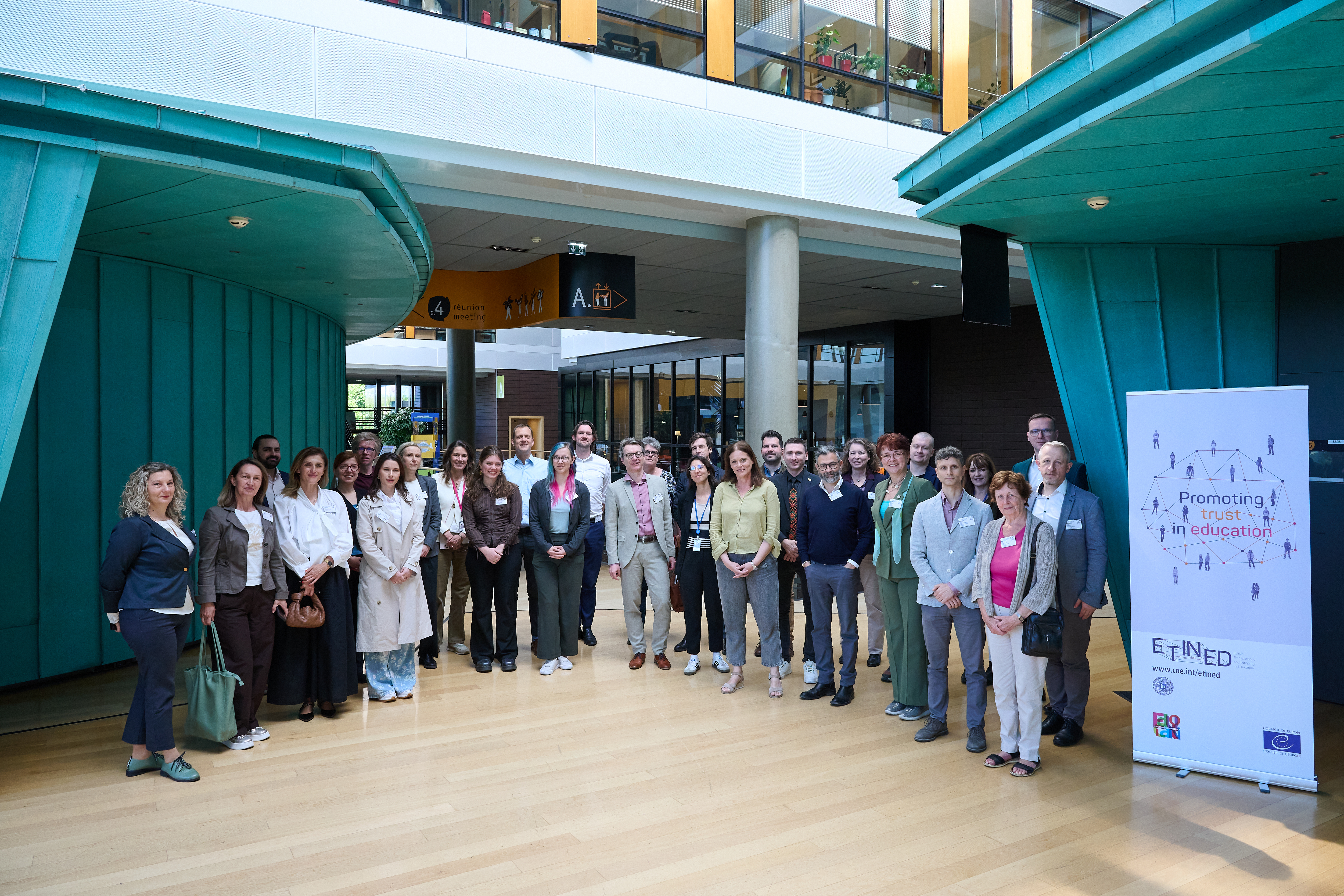
Varied maturity across Europe
The workshop centered on insights from the ETINED report Open School Data in European Education Systems, authored by IIEP-UNESCO. While some countries have developed highly disaggregated, school-level data systems, others remain at earlier stages, with more limited access and less developed infrastructure. Despite this diversity, several common challenges emerge. Many countries still rely on fragmented data systems or manual updates. Data quality and standardization remain persistent issues, particularly in decentralized systems where definitions and reporting practices vary. Privacy and ethical concerns are also paramount, including risks related to misuse, public scrutiny, and the potential stigmatization of low-performing schools.

Access the report here
Country experiences show potential and complexities
Ireland's experience highlights the importance of careful design and governance. Open school data is seen as an important tool for transparency, trust, and informed decision-making. At the same time, simplistic school comparisons, including "league table" effects, can distort interpretation and reinforce inequalities. The key question is then not only whether data should be published, but also what effects its publication may have, underscoring the need for tailored products for different users and robust, clear communication on methodology and context.
Deciding which data should be made open and what should not be accessible is crucial: the question is not only 'can we publish this?', but rather ‘what behaviour might publication create?'
Paul Alexander, Department of Education and Youth, Central Statistics Office, Ireland
Meanwhile, in Iceland, the municipality of Reykjavik collects and shares data to guide decision-making, support children, and improve outcomes – with school quality measured by inputs such as teaching environments and outcomes such as learning and well-being. Recent progress has included new legislation on data use, a national student information system, and centralized registration via island.is, alongside innovative tools like a well-being dashboard.

Stakeholder perspectives
The value of open school data was widely recognized across various stakeholder groups. Representatives from school leaders emphasized its potential to strengthen professional dialogue and support school improvement when used constructively and without judgment. Parent representatives highlighted open school data's role in building trust and enabling more informed choices, while noting that educational realities cannot be reduced to data alone.
School heads are the gatekeepers of data integrity. That is why we need to move from technical training to greater school leader professionalisation on data ethics when it comes to data collection and use as part of open school data.
Petra Van Haren, Director of the European School Heads Association
Youth representatives described it as a powerful tool for advocacy that enables a shift from opinion to evidence. Researchers also called for broader datasets on indicators related, for instance, to school climate, to better capture what quality really means in education.
Open data can only work if students trust the data. They must be involved in discussions about ethical frameworks, what data is shared, and why. Education about data literacy, understanding how to use the data, must be included in curricula.
Anna Weinrich Representing the Organising Bureau of European School Student Union at the Advisory Council on Youth of the Council of Europe
Risks and how to address them
Participants identified common concerns related to personal data protection, re-identification in small datasets, and risk of misinterpretation without context. In decentralized systems like Spain, for example, there are strong issues of data fragmentation and inconsistency, because different regions may define and collect data differently. Proposed mitigation efforts include data aggregation, suppression of small values, stronger legal frameworks, and improved documentation through metadata and transparent methodologies. The importance of a common data "dictionary" was also emphasized to ensure consistent interpretation across users and systems, as well as providing incentives to schools to ensure accuracy if they understand the value of data.
Open school data is more than just a tool for transparency. It is becoming a way to develop citizenship, evidence-based decision-making, and responsible use of emerging technologies, including artificial intelligence.
Muriel Poisson, IIEP-UNESCO’s Team Leader a.i., Knowledge Generation and Mobilization
Recent advances in digital technologies that enable more effective ways to display education data through user-friendly visualisation tools and open data download interfaces were also shared. One notable example is from France with its Model Context Protocol (MCP) developed by the Ministry of National Education, which provides a common framework for artificial intelligence (AI) tools to interact with official datasets, supporting transparency, interoperability, and responsible use of AI.
The workshop closed with an emphasis on the importance of continuing exchange and mutual learning, and on translating discussions into concrete actions to improve how open school data is collected, shared, and used across education systems. Policy guidelines on open school data jointly produced by the Council of Europe and IIEP will be published in due course, capturing the essence of these discussions.


